For a meteorological metaphor, simply ask the heron.
 With the days naturally shorter, there is far less time for species to take on the nutrients needed to protect them from winter's inclement mood. Food is scarcer than during the spring and summer months, so the negative influence of wind and rain during daylight hours is more than an inconvenience: it is an obstacle between wildlife and survival.
Severe rain and gale force winds will make us bolt the doors and turn up the fire, but wild animals need nutrients to survive, and prioritise food for energy not enjoyment. It is difficult to know how a goldcrest, weighing no more than a 20 pence piece, can survive any breeze at all, let alone the fierce winds of the past few months. A day of insufficient food means their bodies are ill-equipped to cope with the wintry conditions, and greatly reduces their chance of survival. In winds that have blown down trees, and floods that have swept through houses, each day is about finding enough food to survive until tomorrow.
It's a little difficult to tell from the photograph below, but this bald bird is a great tit. Such birds are known to moult naturally at the end of the summer, as the old feathers fall from their follicles to be replaced by new, which will help keep them warm during the winter months.
It's a little difficult to tell from the photograph below, but this bald bird is a great tit. Such birds are known to moult naturally at the end of the summer, as the old feathers fall from their follicles to be replaced by new, which will help keep them warm during the winter months.
 |
| Great tit (Parus major) |
Stress and a poor diet can also explain why a bird is losing its feathers. Given that this photo was taken in January, it is possible that a lack of nutrition is the cause of its baldness, or the stress associated with the competition for food. It could also be that the bird is sick or has mites, both of which will affect its ability to satisfy its increased need for food.
 |
| Jackdaw (Corvus monedula) |

Starlings (Sturnus vulgaris) congregate above Baboon Island
With open fields, closed woods, and various waterways in and around the Sanctuary, the area is busy with a variety of different species all searching for food.

 This male blackbird (Turdus merula) has chosen to feast on the plentiful red berries of the rowan tree (Sorbus aucuparia). Later, the seeds will be dispersed in the bird's droppings, allowing the rowan tree to expand its presence over a wide area, thus providing a new generation of food for the birds. Seeds and buds are an important food source, as indicated by this bullfinch (Pyrrhula pyrrhula) [pictured below], ardently chewing at the barely emerging bud.
Below, a siskin (Carduelis spinus) can be seen feeding from a common alder tree (Alnus glutinosa), biting into the cone in an attempt to acquire the small seeds within. The alder seeds are dispersed by the wind from around October, so February hunger means biting deep for those not naturally dislodged. From the picture on the right, it appears the siskin has been successful on this occasion, although it doesn't appear to be much of a return for its efforts.


Siskin (Carduelis spinus)
 |
| Treecreeper (Certhia familiaris) [above and below] |
Staying in the trees, the treecreepers spend their daylight hours searching for insects and spiders hidden in the mosses and bark. There are many treecreepers living in and around the Sanctuary's woods, and are especially prevalent closer to the riverside, where they probe the dead wood of fallen trees. The abundance of insect eating birds points to the Sanctuary being a perfect environment for a variety of invertebrate. The treecreeper below has claimed a protein rich grub from the tree and holds it, cigar-like, in an almost celebratory pose. Such morsels are essential to the nutrition - energy balance, with birds needing maximum nutrition from as little energy as possible.

 |
| Wren (Troglodytes troglodytes) |

The wren is another bird that feeds off insects, invertebrate and spiders, and at the Sanctuary is usually found in close proximity to the treecreeper, sometimes sharing the bounty of a decaying tree, strewn across the river. The Sanctuary's mix of woodland and water offers a perfect environment for this little bird. While it remains a common species, its overall population can be negatively affected during difficult winters. The constant rain and violent winds of recent months must have been quite a trial for a bird so small.
|
| Nuthatch (Sitta europaea) |
admired nuthatch is another successful species in this part of the world, and it isn't any wonder. Despite being small, it has a strong, stocky frame, and a bill designed to crack through nuts. Part of its success is doubtlessly down to the variety in its diet, for as well as eating invertebrate, it will feed off nuts and seeds. Nearly always found in trees, it can easily be lured to garden feeders, especially when sunflower seeds are on offer.
 Another bird that can be tempted by an appropriately stocked feeder is the great spotted woodpecker (Dendrocopos major). Another species frequently found in trees, this particular woodpecker was drumming on this telephone pole. In summer, such behaviour could be a sign of searching for an available mate, although in January it is much more likely to be looking for food. Woodpeckers peck the bark from trees and dead logs to gain access to insects and grubs, something it is less likely to achieve from this pole, which is coated to prevent it from rotting.
Great spotted woodpecker (Dendrocopos major) searching the dead bark for invertebrate last October.

Blackbird (turdus merula)

Blackbird (Turdus merula) searching a field with a mistle thrush (Turdus viscivorus) in close attendance (and below).

It is the unrelenting nature of the rain that has made the winter seem unending, yet the redwing have returned for their winter sojourn. Spending their summers in Scandinavia, some redwing will journey further south into mainland Europe, and use the UK as nothing more than a stopover, while others will remain here for the season. The milder temperatures, and wet, soft fields must appear particularly inviting this year, with flocks of redwing sighted across local fields. The decline in redwing populations means it continues to be a red status species, so it is encouraging to see such numbers at the Sanctuary.

Redwing (Turdus iliacus)

Another major beneficiary of the wet weather is the grey heron. A regular fisher of the local rivers, lakes and ponds, the milder weather has maintained easy access to the ice-free waters.


Grey heron (Ardea cinerea)
In moments when the rain finally eases, and the wind dies to a mild breeze, it may seem that it hasn't been a bad winter, at all. At least for some. The riverside birds seem to take it all in their stride.

Grey wagtail (Motacilla cinerea)

 |
| Dipper (Cinclus cinclus) |
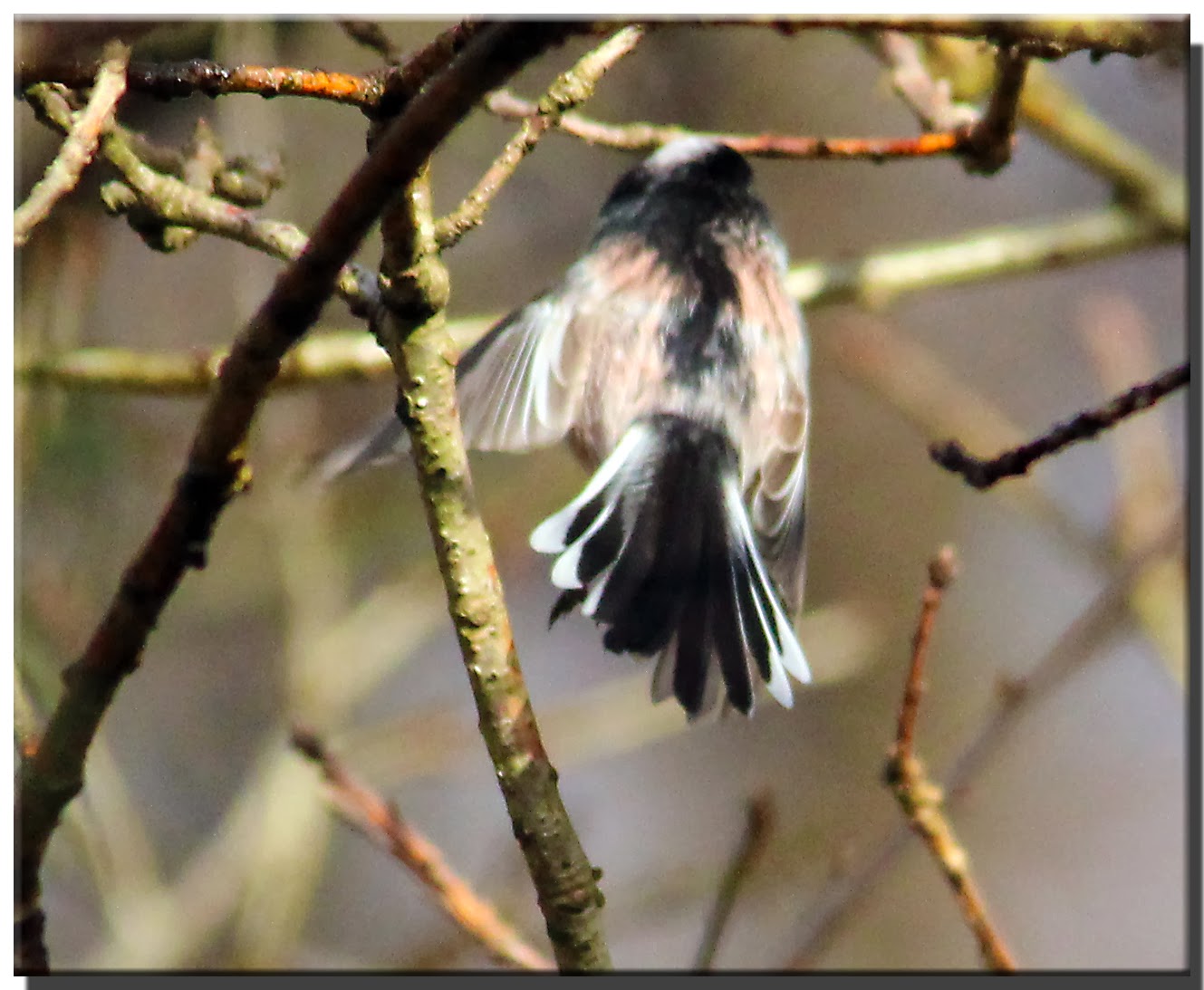
There might not be anything new in this winter collection of Sanctuary wildlife, but it is nice to see the regulars coping with the somewhat unseasonal conditions. And while I have managed to snap those that can be seen frequently, they are but a fraction of those that have gone undetected, in spite of their observation of me. As can be seen from the picture below.

The usual suspects are also out and about.
 |
| Long tailed tit (Aegithalos caudatus) |
 |
| Blue tit (Cyanistes caeruleus) |

 |
| House sparrow (Passer domesticus) |


 |
| Grey Squirrel (Sciurus carolinensis) |
So has the winter been so bad? I suppose it depends on who or what you are, and what you depend on for survival. Many have not made it this far, but for those who have there is a promise of spring in the air. The sunlit hours are increasing daily, the early crocuses have flowered, and the buds of the willow are emerging. While it brings excitement and hope for the months ahead, there remains the prospect that the worst of winter is still ahead of us. Whichever, nature will find its way of surviving.